
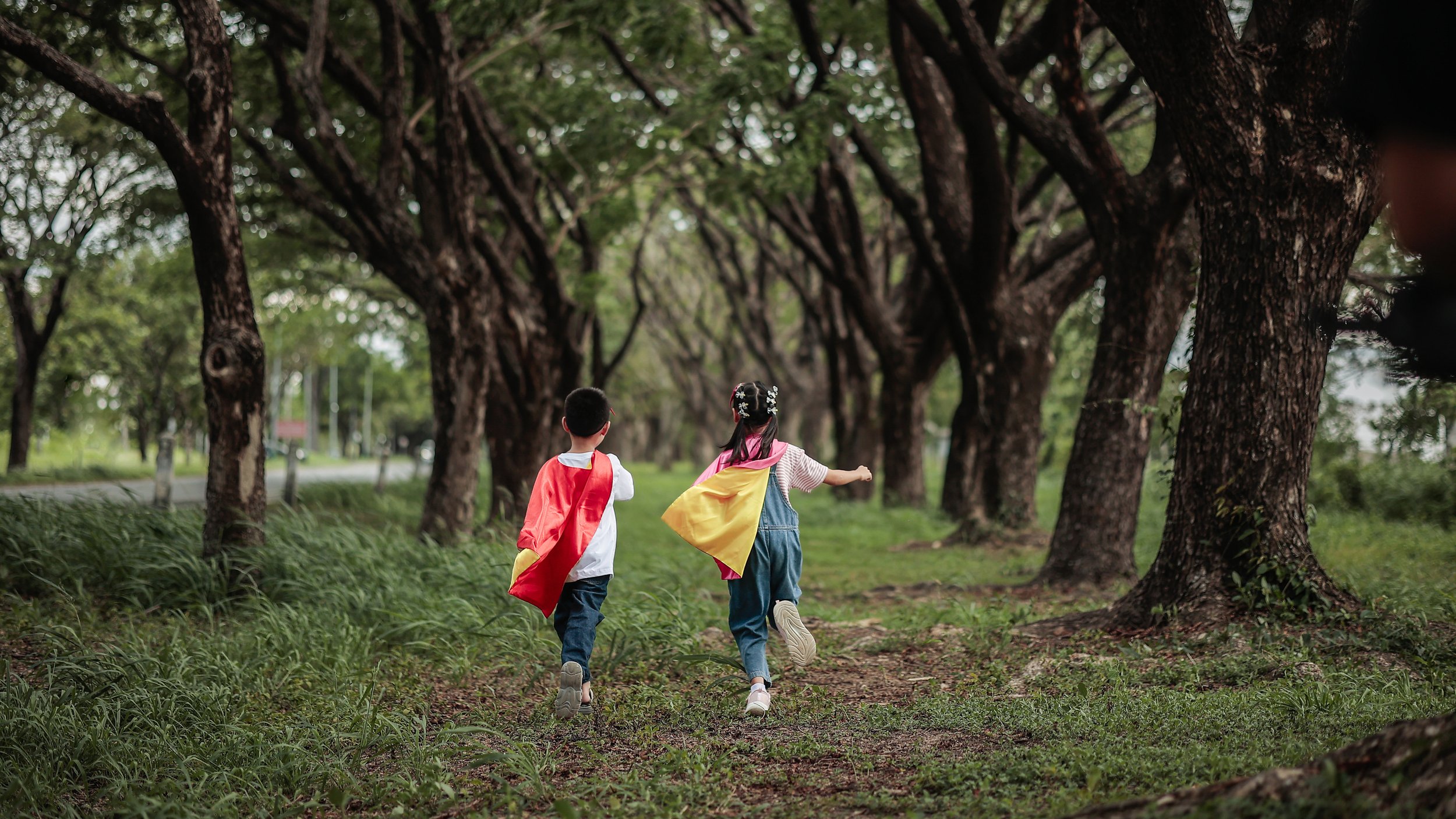
Your couch is a pirate ship. The blanket is a superhero cape. The stuffed animals are attending school. There's a restaurant underneath the dining room table.
And somehow you're expected to understand a complicated set of rules nobody actually explained to you.
Welcome to pretend play.
To adults, these imaginary worlds can seem silly. To children, they're serious business.
Because when children pretend, they're exploring possibilities.
Children Learn by Trying on the World
Children spend much of their lives watching a world controlled by adults, then play gives them an opportunity to turn everything upside down.
Suddenly THEY'RE the teacher. The parent. The doctor. The superhero. The chef. The veterinarian. Or apparently a magical dragon who also runs a grocery store.
In pretend play, children can try on roles and experiment with what happens next.
What does the doctor say? How does the parent comfort the baby? What happens when two characters disagree? How does the superhero solve the problem?
Children get to practice navigating the world while being completely in charge of the story.
Imagination Builds Possibilities
A cardboard box isn't particularly exciting to most adults.
But hand it to a child and wait.
Now it's a rocket. Then a castle. Then a race car. Then a cave. That ability to imagine something different is important.
Pretend play encourages flexible thinking.
There's no single correct answer.
Children get to create a problem and invent a solution.
Change the rules. Try something. Decide it doesn't work, and start again.
They're practicing the idea that there can be more than one possibility.
Pretend Play Can Give Feelings Somewhere to Go
Children don't always walk up to us and say:
"I'm worried about something that happened today and I'd like to process it."
Wouldn't that make parenting easier? Instead, feelings can emerge in other ways.
A toy character may suddenly become afraid. Someone in the pretend family gets angry. A superhero needs to rescue someone. A stuffed animal doesn't want to go to school.
Does every imaginary story contain a hidden message?
No.
Sometimes a dinosaur knocking down the tower is simply a dinosaur knocking down the tower. And that's fun.
But play can also give children enough distance to explore feelings and experiences without having to talk directly about themselves. That's one of the reasons play is such a natural language for children.
Pretending Gives Children Some Control
Children live in a world where adults make many of the decisions.
When to wake up. Where to go. When school starts. What's for dinner. When bedtime happens.
Play changes that.
Inside an imaginary world, the child decides. The dragon can become friendly. The scared character can find a safe place. The superhero can win. The story can be replayed. The ending can change.
That sense of agency is one of the powerful things about child-led play.
For a little while, children get to decide what happens next.
Resist the Urge to Improve Their Play
Adults are excellent at turning things into lessons.
Your child builds something and we ask:
"What color is that?" "How many blocks did you use?" "What letter does dinosaur start with?"
There's nothing wrong with teaching, but children also benefit from play that doesn't need to accomplish an adult-designed objective.
Sometimes our best role is simply to follow.
If your child says the blue block is a pancake? It's a pancake.
If you're told you're the baby dragon? Congratulations on your new role.
If the rules change halfway through? Welcome to childhood.
You don't always need to direct the play for the play to have value.
Give Imagination Somewhere to Grow
Pretend play doesn't require expensive toys. Some of the best ingredients are wonderfully ordinary:
Cardboard boxes. Blankets. Blocks. Art supplies. Stuffed animals. Dress-up clothes. Toy figures. Kitchen utensils. And enough unstructured time for children to decide what those things should become.
Then comes the difficult part for adults:
Try not to take over. Watch. Follow. Wonder. Let your child show you where the story goes.
Play Is Important Work
Childhood contains plenty of structure.
School. Activities. Homework. Schedules. Expectations.
Children also need opportunities where nobody is telling them exactly what comes next.
Because inside those imaginary worlds, they're creating, experimenting, solving problems, exploring feelings, practicing relationships, and discovering possibilities.
It might look like make-believe.
But there's a lot of growing happening inside all that pretending.
At The Healing Playroom, we believe play gives children a natural way to communicate, explore, connect, and grow.
Curious about how play therapy works? Contact The Healing Playroom to learn more about our approach and how we support children and families.